Parents, the Children's Advocacy Center of Central Texas is expectantly awaiting Spring Break with you!!
As we excitedly anticipate this much needed break, let's consider some small steps families across Central Texas can take to have fun, stay safe, and prevent risk and harm to our children.
1. Safe Supervision - Who's in Charge?
There's so many opportunities for rest, fun, and relaxation for our children on Spring Break. We want them to capitalize on this time to recharge so they can finish the school year strong - but how can we have peace of mind when it comes to our child's safety and well being, whatever the plans may be?
Is your older child staying home alone the majority of break?
- Ensure you've had both a conversation about expectations for device use and physically have safeguards in place to help with those expectations. Think - time limits on device use/video games, what media is/is not allowed to be viewed, and what apps are they allowed to spend time on.
- Be clear who is allowed in the home and what to do if someone unexpected/unapproved knocks on the door or tries to visit.
- A brief conversation about "what to do in case of emergency" will always be worth while. Consider a fire escape plan, calling 911 first, and where to go if they need help outside the home.
- Is the oldest in charge of younger siblings? Consider the level of responsibility and is the oldest sibling prepared to handle/monitor the 3 previous points.
Is another adult in charge of your child for the majority of the week?
- Has their been a recent discussion surrounding expectations on discipline and how the adult will respond to the child's behavior? Has their been difficult behavior by your child recently that needs to be discussed with the adult to ensure they're prepared to cope appropriately with those behaviors?
- What are the expectations around device use by both the adult and child, privacy for your child, and updates throughout the day?
- Do you have a family code of conduct in place to share with the adult about household expectations/body safety?
Is an organization in charge of your child for the majority of the week?
- Are you familiar with the organization's polices and procedures around child safety prevention, response, and reporting? Does the organization have those easily available to parents?
- What is the adult-child ratio for supervision?
- What is the organization's policies on notifying parents about an incident?
2. Rather Safe than Sorry
Spring Break comes with some big adventures sometimes! These adventures can take us near water, new places, or big crowds.
- Don't be complacent about the risks that come with children around water. Ensure children are wearing life vests in open waters/on a boat and floatation devices in pools if they do not know how to swim, private pools have safeguards in place to prevent accidents (fence, locks, proper supervision), and children are never left unsupervised in the water.
- Children should memorize contact information in the case they are separated from you - a name, phone number and address can be incredibly helpful for a first responder as they navigate reuniting your family.
- Consider how likely your child may be to leave your side when you're in a new place or there's lots of attractions. In highly stimulating situations (amusement parks, the zoo, museums, etc.), many children have a tendency to wander, feel scared and retreat, or simply follow their curiosity. Be sure to create a plan with your child in case you were to get separated. Set clear expectations with your child and other adults so that there is no room for the bystander effect - assuming another adult is watching a child at all times.
3. Body Safety and Boundaries
As much as we love time off from our normal schedule, and the opportunity to visit with family and friends, these things can lead to situations where children are more at risk for sexual abuse. What should we consider in order to put our minds at ease?
- Peer-on-peer abuse is the most common form of child sexual abuse (CSA). CSA is also most likely to happen in a home, in the afternoon (after regular activities have ended and there is generally a lack of adult supervision). Consider how to have proper safeguards in place like keeping doors open, minimizing the time when there's no adult supervision, and discussing with your child how their body deserves to be safe from everyone - friends, cousins, and siblings included.
- Grooming
is the first step in adult-on-child sexual abuse. These grooming behaviors will happen before the adult sexually abuses a child, so be vigilant and don't be afraid to ask your child questions about their time with/feelings about other adults in your life. Here are some red flags that grooming might be taking place:
- the adult involved seems TOO eager to be with your child or constantly pushes for/seeks alone time with your child
- the adult does not respect or pushes the boundaries/rules you/your child have in place concerning safety and limits
- the adult is skeptical of your rules or is constantly minimizing your concerns for safety
- the adult tries to have private conversations with your child online or in person
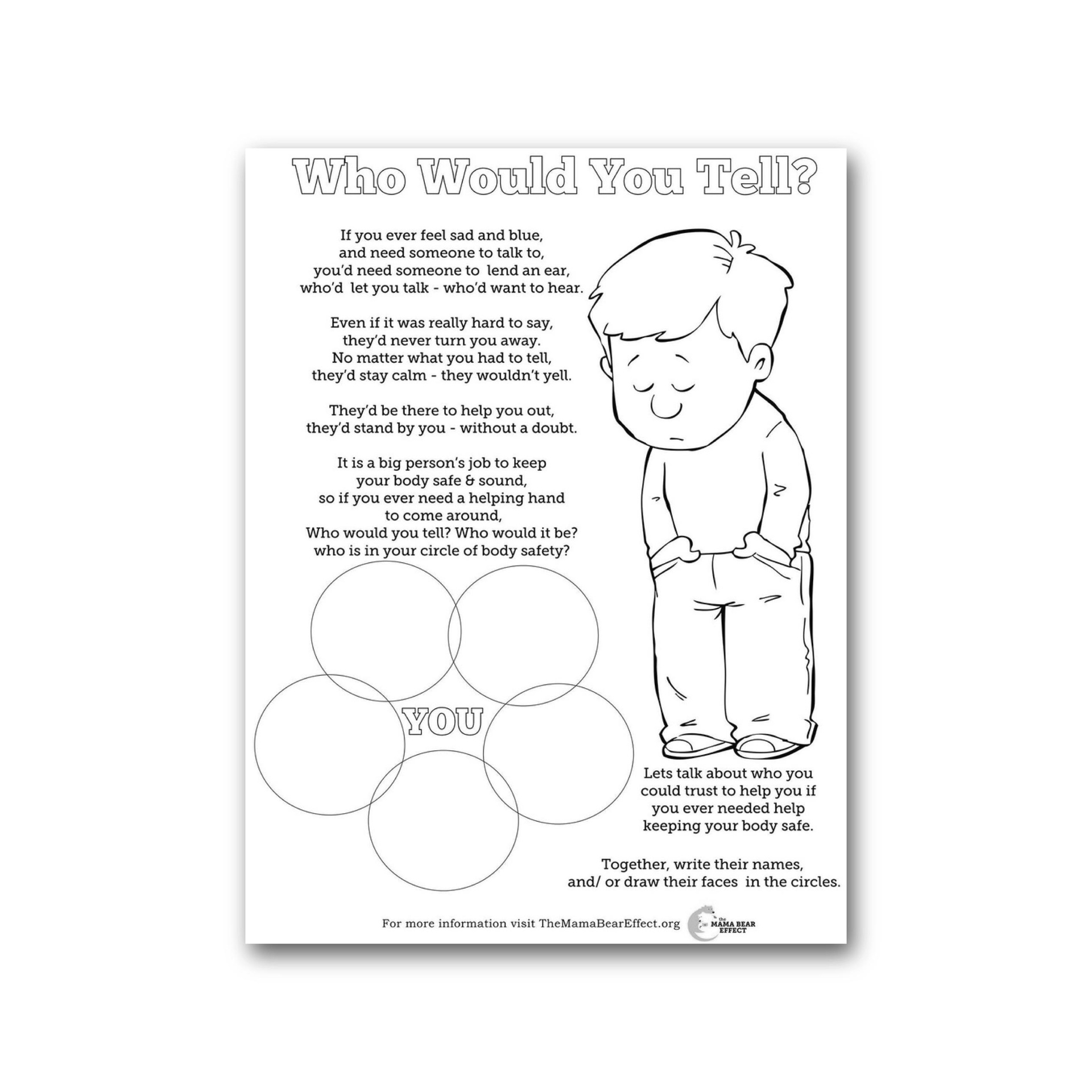
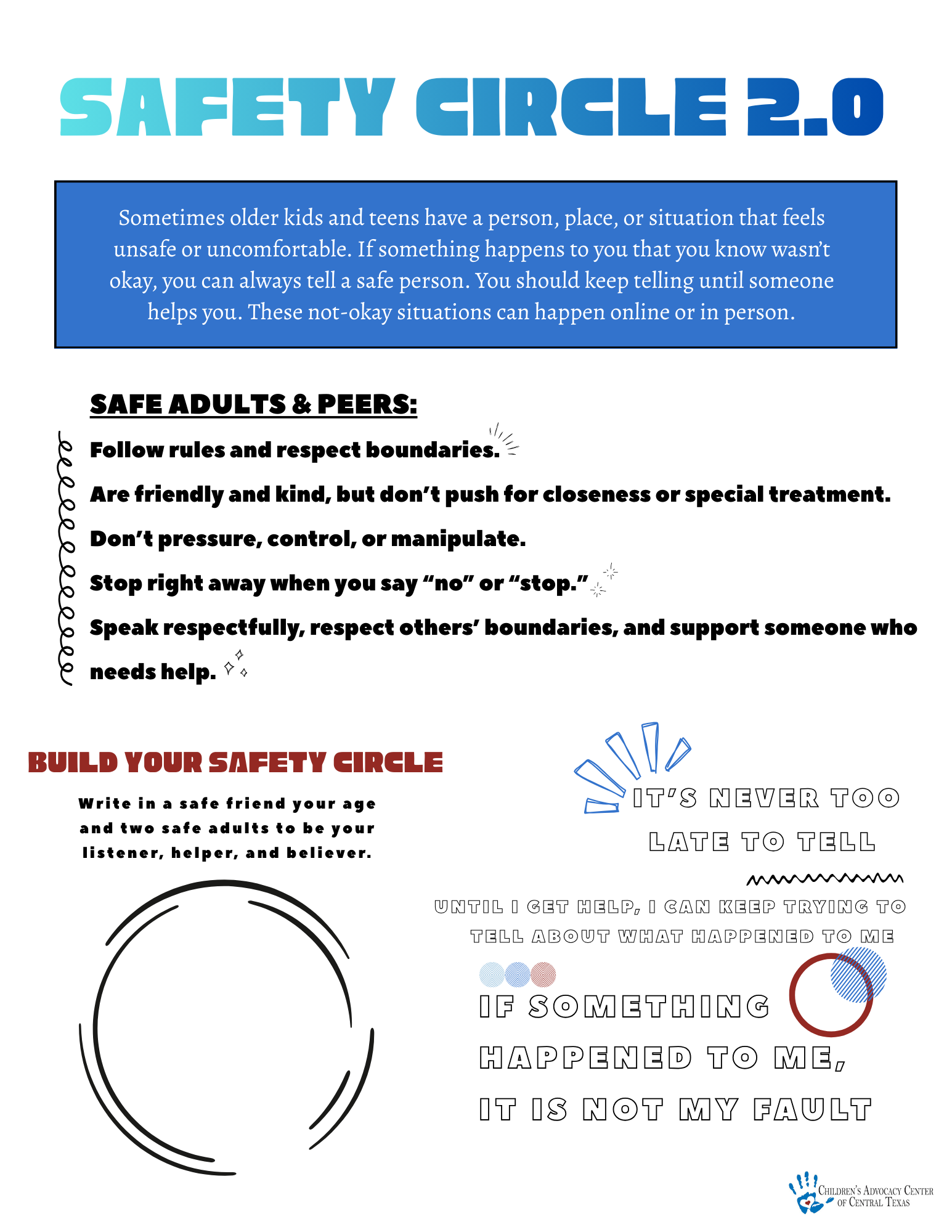
- Implement a Body Safety Circle to openly discuss topics like privacy, body parts, body safety violations, who to talk to and how to speak up to when something happens. For younger children, use The Mama Bear Effect's"Who Would You Tell" resource, and for older children, use our Body Safety Circle 2.0 resource.
What do you already do to reduce risk and keep kids safe?
It takes both families and communities to protect children from abuse, and children need adults to create boundaries, ask difficult questions, and put preventative measures in place to ensure children can thrive and develop in safety. We encourage you to keep going with the normal routines that protect your children, and review these resources and considerations to see how they can be practiced in your household.
Contact our Outreach and Education team if you want further support on navigating new steps in prevention!
Alison Sutherland
254-613-1035